Most small offices do not fall apart dramatically. They decline one coffee ring at a time: a mug left on a desk overnight, a bin liner that has been “someone else’s job” for a week, a meeting room still showing last Tuesday’s notes when a client walks in at nine.
None of that is a crisis on its own. Together, it shapes how your team feels about coming in and how visitors size up the business in the first ten seconds. The answer is not a heroic deep clean every few months. It is a short, repeatable list that takes minutes to work through and leaves nothing to memory.
Rotas fail when they are too ambitious. If Monday’s plan needs an hour of somebody’s time, it will survive a fortnight at best. Keep the daily work to ten or fifteen minutes shared across the team, the weekly jobs to around an hour for one person, and the monthly tasks to a couple of hours. Anything longer belongs with a professional cleaner on a proper scope of work.
Write the list down — on the kitchen wall, in a shared document, wherever people will actually see it — and put a name beside each task. “Everyone” is not a person.
Working surfaces collect more than crumbs. Phones, keyboards and mice carry whatever came in on people’s hands, so a quick wipe at the end of the day makes a difference during cold and flu season. Keep a spray bottle and cloth in each zone, and use a separate cloth for the kitchen. Colour-coded cloths are cheap and remove the guesswork.
If you hot-desk, wipe the desk, chair arms and monitor base before you leave rather than after you arrive. It takes a minute, and the next person inherits a clean start.
Wipe worktops, the sink and the taps, and dry the draining board rather than leaving a puddle behind it. Anything in the fridge gets a label with a date; anything unlabelled goes in the bin on Friday afternoon. Milk is the usual offender, so check it and do not leave it there over the weekend.
Food waste goes out daily. General waste goes when it is three-quarters full — a bin packed to the lid splits, smells and takes twice as long to sort out. New liner in, wipe the lid and pedal, and check the recycling is not hiding half a sandwich.
A daily list for a typical small office:
These are the jobs nobody notices until they are missed. Set aside an hour, ideally at the same time each week so it does not drift into next month.
A meeting room is the one space where your standards are on display. Build a short routine: clear cups and rubbish, wipe the table, push chairs in, check the screen, cables and remote, and open a window for a minute if the room smells stuffy.
After the meeting, spend two minutes doing the same in reverse. Sticky notes on the wall, marker on the whiteboard and a tangle of cables all suggest a business that has stopped paying attention. Keep a small caddy in the room with cloths, screen wipes and pens, so nobody has to walk to the kitchen mid-meeting.
Once a month, go further than the weekly round. Empty the fridge completely, take the shelves out, wash and dry them before they go back. Clean behind and under furniture where the vacuum does not reach. Dust radiators, vents and blinds, and vacuum upholstery with a brush attachment.
Then clean the things that are touched constantly and cleaned rarely: chair arms, door frames, the shredder, the franking machine if you have one. Replace worn mop heads, cloths and vacuum filters, and check the cleaning cupboard for anything running low.
Two things keep a checklist alive: fairness and visibility. Rotate the unpopular jobs — the fridge, the bins, the kitchen — so the same person is not quietly doing them every week. Ten minutes at the end of the day, before people drift off, works far better than an hour on a Friday. Put the routine into inductions so new starters learn it as part of the job rather than as an imposition.
Keep supplies in one place and keep them stocked. Most rotas collapse not because people refuse to clean, but because there is no cloth, no bin liner and no idea where either is kept.
If the checklist needs ten minutes of discussion every week, the problem is usually the system rather than the people.
There is a point where a team rota stops being sensible. If you have more than a handful of people, clients visiting most days, or a rota that has quietly stopped happening, an external cleaner for a few hours a week plus a short daily team tidy tends to be the calmer option.
When you appoint one, agree the scope in writing and be specific about the awkward items: inside the fridge, inside the microwave, the bins, the kitchen floors, and who supplies the materials. Ask for public liability insurance and check references from similar-sized offices. Agree a weekly walkthrough so small problems get raised early rather than building up quietly.
Whichever route you take, follow the instructions on every cleaning product, keep the room ventilated while you work, never mix bleach-based products with acidic cleaners, and store chemicals away from food and personal belongings. If you are unsure about a product or a delicate surface, check the label or ask the supplier before you use it.
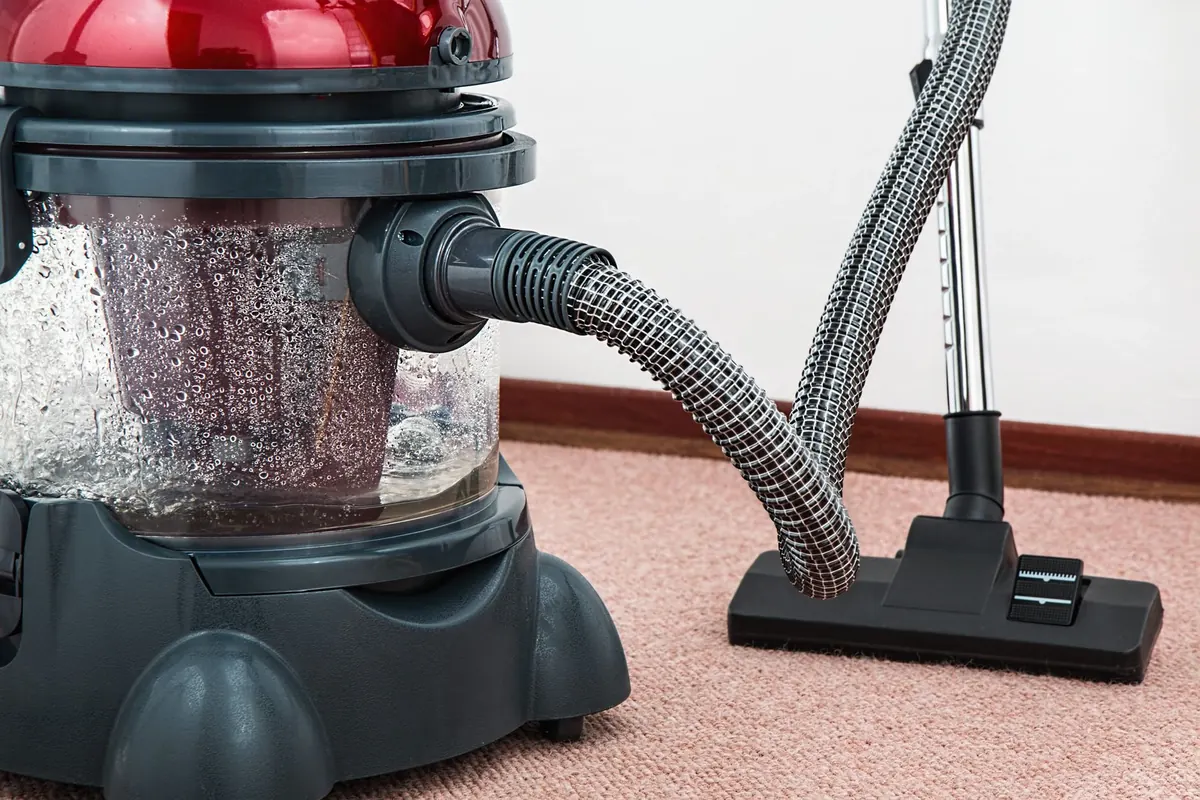
Photo: Ylanite / Pixabay