Dust is not simply dirt that has landed. Much of what you wipe away is skin cells, textile fibres, pollen and fine grit, and the way you remove it decides whether it stays gone or merely moves somewhere else. Most homes are dusted every week, yet skirting boards, picture rails and the tops of door frames still grey over within days. The culprit is rarely effort. It is technique: a soaked cloth, a circling hand, a spray used out of habit. Fix those three habits and the same amount of work produces a noticeably cleaner house.
The most common error is treating dust as something that needs to be washed off. Spray a surface until it glistens, wipe it once, and you have made a thin film of water and dust. The water evaporates; the dust does not. It dries in streaks, sits slightly tacky on wood and laminate, and grabs the next round of airborne particles more readily than a clean dry surface would. On sealed timber and painted MDF the effect is worse, because moisture works into the grain and dulls the finish over time.
The correction is straightforward: mist the cloth, never the surface. Fold a microfibre cloth into quarters, give it one light spray, and that is enough moisture for a decent stretch of furniture. For dust on its own, a dry microfibre cloth is sufficient. Save damp wiping for sticky marks, fingerprints on glass and kitchen splashbacks, then buff with a separate dry cloth while the surface is still barely damp. If you can see water sitting on the wood, you have used too much.
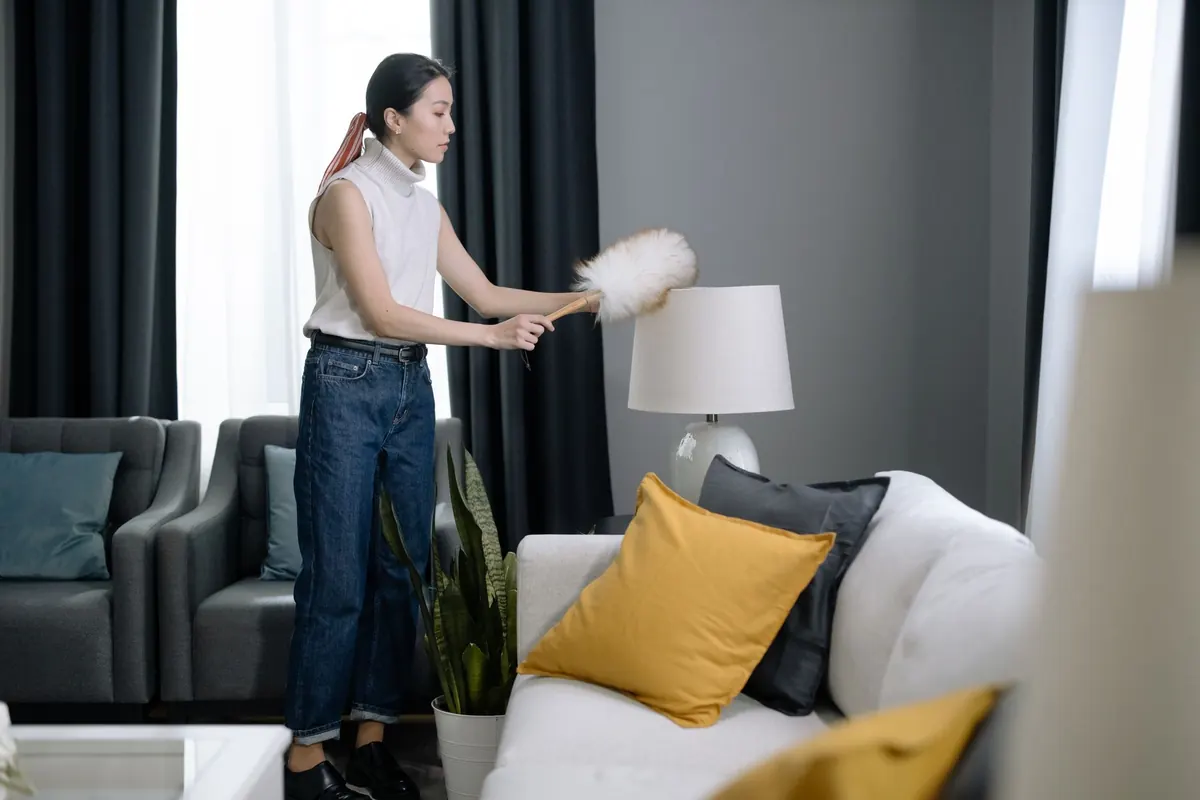
Feather dusters are the classic offender. They flick dust into the air, where it drifts and settles again on the surface you have just finished, often within the hour. Cotton tea towels and retired t-shirts are little better: the fibres are too smooth to hold fine particles, so the cloth drags dust along the shelf and leaves lint behind. Paper towel copes with glass but shreds on rougher surfaces and sheds fibres onto dark wood.
Microfibre works because its fibres are split into strands far finer than a human hair and carry a small static charge, which is why they hold dust rather than pushing it about. Not all microfibre is equal, though.
Wash them at a low temperature with a plain detergent and no fabric conditioner. Conditioner coats the fibres and gradually turns a good cloth into a smeary one. A cloth used on a greasy hob or extractor should go straight into the wash rather than back into the dusting pile.
Circles feel thorough, but on a dusty shelf they are not. A circular motion stirs particles up and spreads them towards edges you have already cleaned. On hard surfaces carrying grit, it grinds that grit into the finish. Circles also make it easy to miss corners, which is precisely where dust collects thickest.
Work in overlapping straight lines instead. Start at one end of the surface and move across in a slow S-pattern, lifting the cloth at the far edge rather than dragging it back over clean wood. Turn the cloth to a fresh quarter as each panel dulls, and shake it out or swap it before moving on. The same principle applies to walls, venetian blinds and stair spindles: one direction, overlapping passes, no back-and-forth scrubbing.
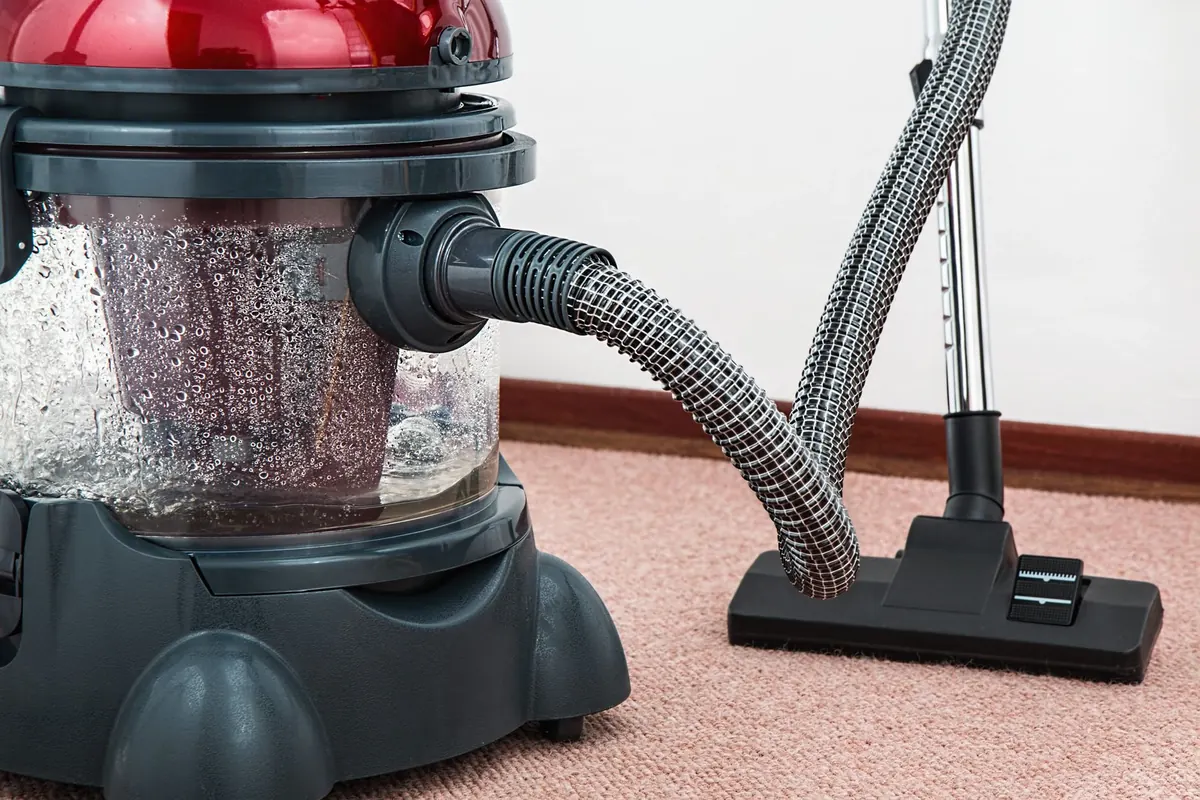
Dust falls. Hoover the floors and then dust the shelves, and those shelves drop a fresh layer onto the carpet you have just cleaned. Work from the top of the room downwards: ceiling corners and light fittings, then picture rails and the tops of wardrobes, then furniture and window sills, then skirting boards, then floors last. When you do reach the floor, use a vacuum on its hard-floor setting or a dry microfibre mop. A rotating brush bar on a hard floor tends to scatter fine dust rather than collect it.
Many furniture polishes and anti-static sprays leave a thin oily or silicone residue. It looks smart for a day or two, then holds dust like a magnet. If dark furniture looks smeary in raking light, residue is the likely reason.
Try water and microfibre for a fortnight and compare. On wooden furniture a dry cloth is usually enough; for stubborn marks, a barely damp one, dried straight away. Never spray directly onto screens, painted surfaces or timber. Apply the product to the cloth, away from the object, so overspray does not settle on everything nearby.
Dust is generated constantly: skin cells, fibres from bedding and towels, pet hair, pollen and grit tracked in from outside. You cannot dust your way out of a supply problem, but a few inexpensive changes cut the volume considerably.
For most homes, a quick dry dust of high-touch surfaces once a week, skirting boards and door tops fortnightly, and floors as often as your household needs them, is plenty. The aim is not a sterile house. It is surfaces that stay presentable for a week rather than a day.
Dust will always return, because people live in the house. What you can change is how much of it stays. Put down the soaked cloth, pick up a dry microfibre one, and move in lines instead of circles. Three small corrections, and the dust you remove stays removed for far longer.
Photo: cottonbro studio / Pexels