It usually begins with a spill. Coffee arcs over the arm of the sofa, or someone wheels a chair across the office carpet and leaves a grey track behind it. You dab at it with a cloth, try a spray bottle, and then start weighing something bigger: hire a machine, or pay someone who does this every day?
Both routes can work. What separates them is the carpet, the type of soil, how much space is involved, and what your time is worth. Here is how the two compare on cost, equipment, drying time and the result you actually see.
A professional clean comes with a clear figure: labour, equipment, cleaning solutions and — with a good firm — a return visit if a stain wicks back after drying. That number is usually higher than a day's machine hire and a bottle of shampoo, and it is tempting to stop the comparison there.
The fuller calculation includes your own hours, the delivery or fuel charge on a hire machine, and the cost of doing the job twice. DIY cleaning carries risk as well. Over-wet a wool carpet and the backing can delaminate; use the wrong product on a stain and you can set it permanently or strip the colour. When that happens, the money spent on the DIY attempt goes towards replacing the carpet rather than cleaning it.
A useful rule: DIY is cheap when the job is small, light and low-risk. It stops being cheap the moment you need a second attempt or a repair.
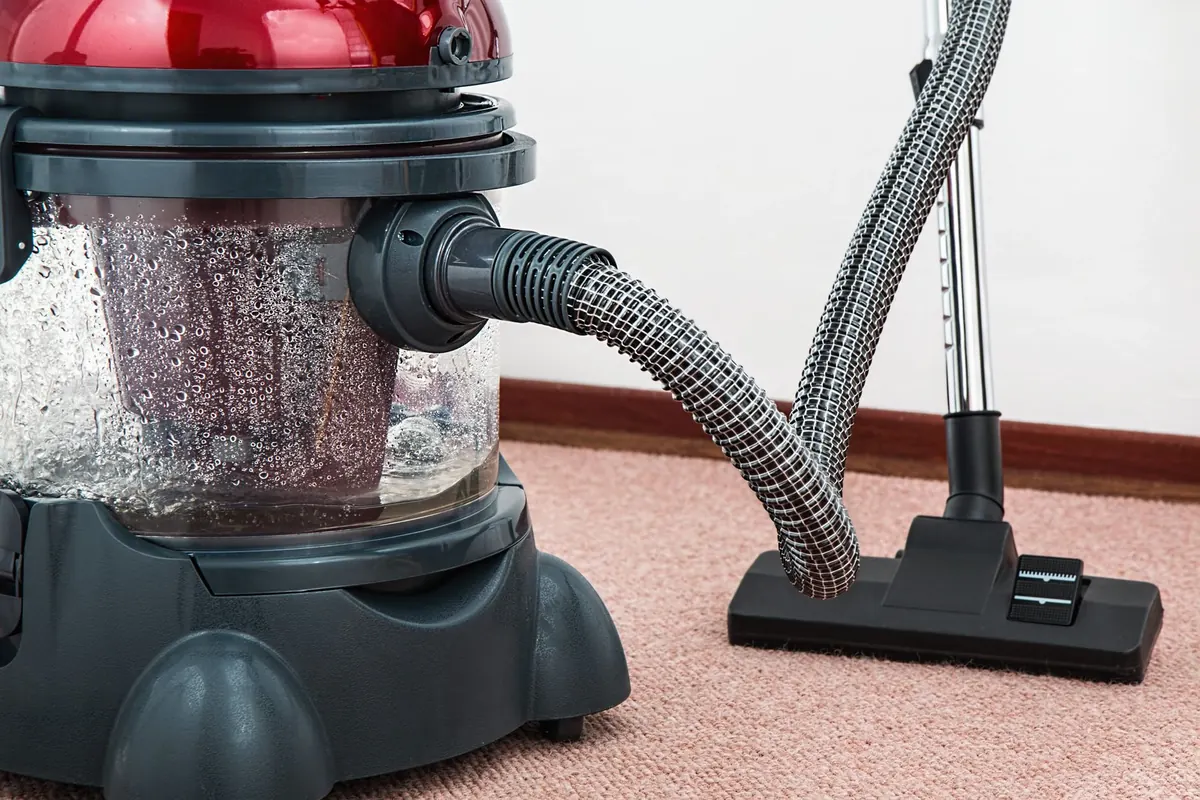
Rental machines from a hardware shop are built for occasional use. They generally have less suction and lower water pressure than the equipment a professional brings, and the tanks are small enough that you empty and refill them constantly.
The most common method is hot water extraction — often called steam cleaning — using a truck-mounted unit or a high-powered portable machine. It brings heated water, stronger extraction, pre-spray and dwell time, mechanical agitation, dedicated spotting agents, air movers and moisture meters. A good technician also reads the carpet before starting: fibre type, colour-fastness, previous treatments and any weak seams.
That difference matters most on the jobs people struggle with at home: wicking stains that creep back from the backing, pet odours, deep traffic lanes, and the sticky shampoo residue left behind by earlier DIY attempts.
Drying is where the gap is most obvious. Carpets cleaned properly, with strong extraction and good airflow, are typically dry within a few hours. Rental machines often leave more water behind, and plenty of households find the carpet still damp the following morning.
To speed things up whichever route you take: open windows, run fans across the surface, keep the heating on in cool weather, and resist putting furniture back until the pile is dry to the touch. Walk on it in socks rather than outdoor shoes, and keep children and pets off treated areas until they are dry.
For an office, drying time equals downtime. Ask about low-moisture methods such as encapsulation if you cannot close an area, and book the work outside opening hours so the carpet is ready for the first arrival.
A careful DIY clean lifts surface soil, refreshes colour and deals with a fresh spill. It is a perfectly reasonable way to maintain a hardy synthetic carpet between professional visits.
What it rarely fixes:
Professional cleaning reaches deeper and rinses out residue, which is why the results tend to hold for longer. Neither route can rebuild worn fibre — once pile is flattened or abraded, cleaning improves appearance but cannot restore it. Be cautious of anyone promising otherwise.
At home, the priorities are the carpet's age, its fibre and how the household uses the room. A busy hallway with a dog needs more attention than a spare bedroom. Test any product on an inconspicuous patch first, and check the manufacturer's care guidance before choosing a method — many warranties set out which cleaning methods are acceptable, so keep your receipts either way.
In an office, the questions shift to access, safety and downtime. Who moves the chairs? Who signs off on wet floors and trailing cables? A planned schedule — thorough extraction once or twice a year, with spot treatment in between — usually costs less than reacting to a ruined carpet the week before a client visit.
Ask one question: what happens if this goes wrong? If the answer is "I do it again next weekend", DIY is fine. If the answer involves replacing a carpet, a landlord inspection or a room you cannot close, pay for the equipment and the experience instead.
Whichever you choose, get a written quote, ask what happens if a stain returns, and confirm the firm is insured before work begins. If anyone in the building has asthma or allergies, mention it and ask about low-residue products. For an unusual stain on an expensive carpet, check the manufacturer's guidance or speak to a specialist before applying anything strong.
And keep it in perspective: regular vacuuming, prompt blotting of spills and a mat at every entrance will do more for carpet life than any single deep clean.
Photo: Pixabay / Pexels